










Induction Melting for Gold and Silver: Crucibles, Tongs and Set-Up
An induction melting furnace gives jewellers and refiners a clean, controllable way to melt gold and silver without an open flame. The furnace itself is only part of the system. The crucible, the tools, the electrical supply, the cooling water and the room around it all decide whether your first melt goes smoothly. This guide explains how induction heating works, why graphite crucibles are the usual choice, and how to plan an induction furnace setup that is safe from day one.
How Induction Heating Works
An induction furnace passes alternating current through a water-cooled copper coil. That current creates a rapidly alternating magnetic field inside the coil. When a conductive material sits in that field, the field induces circulating electrical currents in it, called eddy currents. Those currents flow against the material's electrical resistance and generate heat inside the material itself. The coil does not need to touch the charge, and there is no flame or combustion gas in contact with the metal.
A few points matter for precious metals:
- Gold and silver are non-magnetic. Magnetic metals such as steel get extra heating from hysteresis below their Curie point. Gold and silver do not, so they rely on eddy currents alone.
- Gold and silver have low electrical resistivity. Silver has the lowest resistivity of any metal, and gold is also very low. Low-resistivity metals heat more slowly by induction than high-resistivity ones, especially in small pieces such as filings or casting grain.
- Frequency affects penetration. Most of the heating happens near the surface of the part, the "skin". Lower frequencies penetrate deeper, which suits larger batches; higher frequencies concentrate heat near the surface.
- Coupling matters. The closer the charge or crucible sits to the coil, the stronger the induced current. A crucible that fits the coil properly heats more efficiently.
For reference, pure silver melts at 962 °C (1764 °F) and pure gold at 1064 °C (1947 °F). Alloys melt over a range that depends on composition, and you will usually pour somewhat above the melting point so the metal stays fluid long enough to fill the mould.
Why Graphite Crucibles Are Common for Gold and Silver
Because gold and silver heat slowly on their own, induction melting usually uses a graphite crucible. Graphite is electrically conductive, so the field induces currents in the crucible wall and it heats up quickly. That heat then transfers into the charge by conduction. Once the metal is molten, it also couples with the field and the melt is stirred gently by the induced currents.
Graphite also tolerates thermal shock well and resists acids, alkalis and organic solvents. The trade-off is that graphite slowly oxidizes in air at melting temperatures, so crucibles wear and should be treated as consumables. Inspect them before every melt and replace them when the walls thin, crack or flake.
When choosing a graphite crucible for gold, match it to two things: your coil's inside diameter and your batch size. A crucible that is too small for the coil couples poorly; one that is too large will not fit or will sit too close to the coil.
| Crucible | Capacity | Fit | Notes |
|---|---|---|---|
| Graphite Crucible w/ SiO2 Liner, 150 ml | 150 ml | 75 mm ID induction coils | 99.9% purity graphite inside a silicon dioxide jacket that contains molten metal if the graphite cracks; up to 1500 °C constant working temperature |
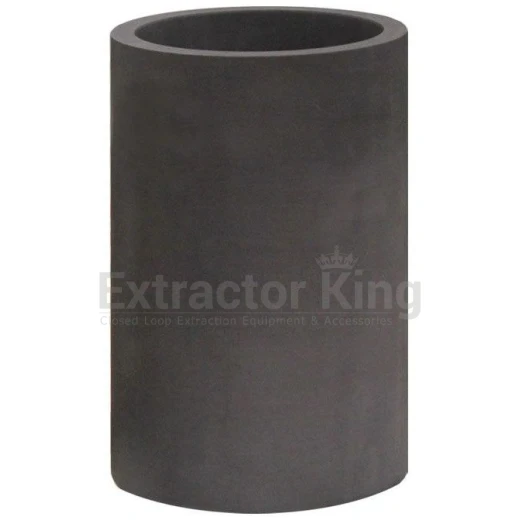
| Graphite Crucible for Metal & Casting, up to 22 lb | 22 lb maximum casting capacity (1.26 L) | Across International 15 kW low-frequency melting heater (IHL15K) | Flat bottom; 120 mm OD, 100 mm ID, 180 mm tall, 10 mm wall; up to 1500 °C constant working temperature |
The SiO2 jacket on the 150 ml crucible is a useful safety feature for small bench melts: if the graphite fails, the jacket holds the metal rather than letting it run into the coil.
Tongs, Stirring Rods and Other Tools
Precious metal melting equipment goes beyond the furnace. Plan these tools before you power up:
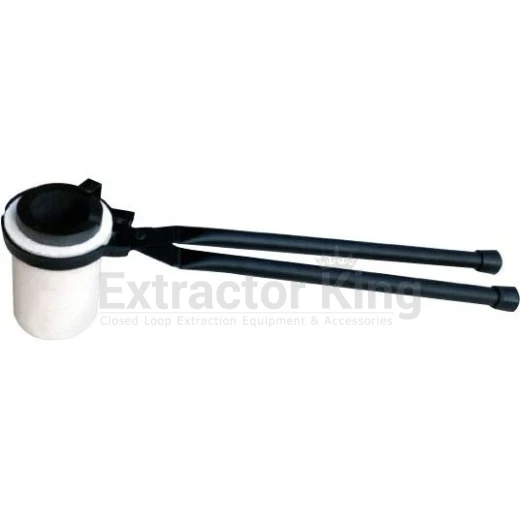
- Crucible tongs that fit your crucible. Tongs should grip the crucible securely without squeezing it. The 17" steel crucible tongs are made for the Across International 150 ml graphite/silica crucible set. For larger crucibles, use tongs or a pouring shank sized for that crucible.
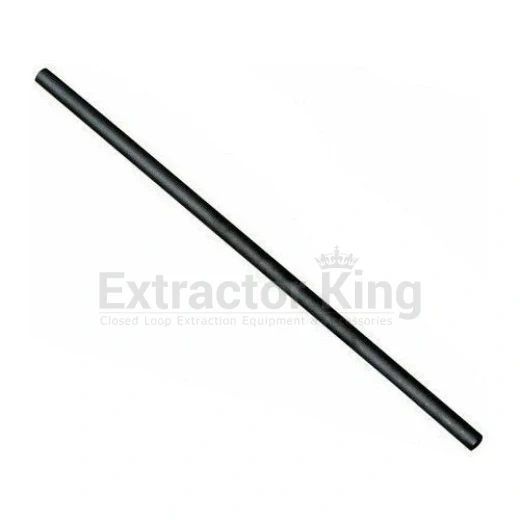
- A graphite stirring rod. A rod such as the 1/2" x 14" carbon graphite stirring rod (12 x 355 mm) lets you stir the melt and work in flux without adding contamination from a steel tool.
- Moulds. Ingot moulds should be clean, dry and preheated.
- Flux. Borax is widely used with gold and silver to help collect oxides and impurities into a slag you can skim.
- A dry sand tray or refractory surface to set down a hot crucible.
Planning Your Induction Furnace Setup
Electrical supply
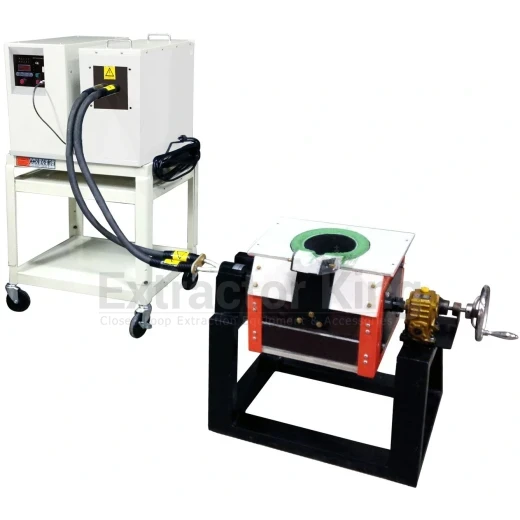
Induction furnaces draw serious power, and the supply has to match the machine exactly. For example, the 25KW Low-Frequency Induction Melting Furnace 1-20KHz is available only in 460-480 volt three-phase. It is part of Across International's IHL low-frequency series, suited to melting metal batches over 4 lb, works with non-ferrous metals, and automatically adjusts to the best resonant frequency. Its protections include shutdown if input voltage exceeds 528 V, plus overheat and overcurrent/malfunction shutdowns.
Before ordering any furnace, have a licensed electrician confirm what your building supplies and install a dedicated, properly rated circuit with a disconnect. Do not run an induction furnace from an extension cord or an improvised connection.
Cooling water
The copper coil and the power electronics are water-cooled. On the 25 kW unit, if the IGBT heat sink exceeds 55 °C the machine shuts down and alarms; the fix is to increase water pressure or lower water temperature. In practice, plan for:
- A recirculating chiller or a reliable water supply with the flow and pressure the manual specifies.
- Clean water as the manual directs; hard water can leave scale in coil passages and reduce cooling.
- Hoses routed away from walkways and the pouring area, with secure fittings. Check for leaks before every session.
Workspace
- A dry, non-combustible floor such as concrete. Water and molten metal are a dangerous combination, so keep the area free of spills.
- A short, clear path from the coil to the mould, with nothing to trip on.
- No flammable solvents, rags or paper near the furnace.
- Local exhaust ventilation over the melt area. Flux and any coatings or contaminants on scrap produce fumes.
- A suitable fire extinguisher within reach, and a first-aid kit with burn supplies.
PPE
- Safety glasses under a full face shield. Every crucible and tool listed here comes with the same warning: always wear eye protection when melting.
- Heat-resistant gloves rated for molten-metal handling.
- A leather or heat-resistant apron, long sleeves in natural fibres (synthetics can melt onto skin), long pants worn over leather boots.
- Remove rings, watches and other metal jewellery. Metal near the coil can heat quickly in the field.
- Follow the manufacturer's guidance on keeping people with implanted medical devices away from the furnace.
Your First Melt, Step by Step

Video: Operation video of SuperbMelt Induction Gold Melting Furnace (SuperbMelt, YouTube)
The video above shows a SuperbMelt induction gold melting furnace in operation. Controls differ between models, so always follow your own furnace's manual. A typical first melt looks like this:
- Inspect the crucible for cracks or thin spots, and confirm it sits centred in the coil.
- Start the cooling water and confirm flow before switching on power.
- Preheat the crucible empty to drive off any moisture, along with your stirring rod and mould.
- Load clean, dry metal. Never add damp or wet pieces to a molten bath.
- Bring the power up and watch the charge. Add a small amount of flux once melting begins.
- Stir gently with the preheated graphite rod and skim the slag.
- Shut off power, lift the crucible with properly fitted tongs and pour in one smooth motion into the preheated mould.
- Set the crucible on dry sand or refractory to cool, and leave cooling water running as the manual directs.
Start with a small batch of silver or scrap before committing a valuable gold melt. Melting silver with induction is a good way to learn how your furnace responds.
Get Help Matching Equipment to Your Process
Choosing the right furnace, coil, crucible and tools depends on your batch sizes, metals and electrical service. If you would like help putting together a system for your shop or refinery, request a quote and our team will help match equipment to your process.
Equipment in this guide
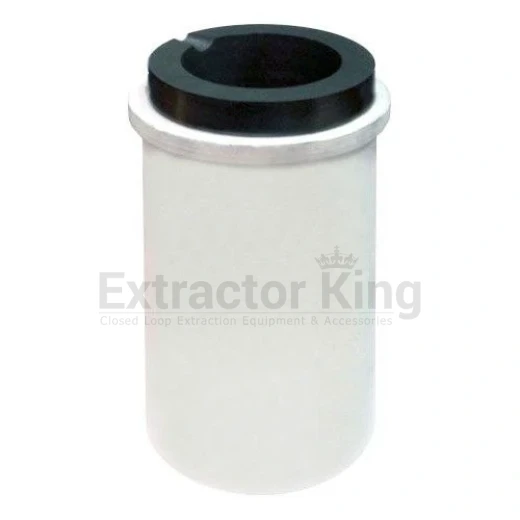 Graphite Crucible w/ SiO2 Liner for Metal Casting 150ml Capacity
View product
 1/2" x 14" Carbon Graphite Stirring Rod for Metal Casting
View product
 25KW Low-Frequency Induction Melting Furnace 1-20KHz
View product
 Steel Crucible Tongs 17" in Length for Induction Melting
View product
 Graphite Crucible for Metal & Casting Up To 22Lb Capacity
View product