























Removing Chlorophyll and Colour from Botanical Extracts
Anyone who has made a plant extract knows the problem: the finished oil comes out dark green or brown, tastes grassy and bitter, and looks nothing like the clear, golden product the customer expects. Most of that colour and harsh taste comes from one family of molecules: chlorophyll. The good news is that chlorophyll is one of the easier impurities to deal with, once you understand what it is and where it gets into your process.
This guide explains what chlorophyll is, why it ends up in extracts of herbs, spices, flowers and other botanicals, and the practical ways to keep it out or take it out: at extraction, with adsorbent media, and by distillation.
What chlorophyll is
Chlorophyll is the green pigment plants use for photosynthesis. Land plants contain two main forms, chlorophyll a and chlorophyll b. Both have the same basic shape: a flat ring structure (a porphyrin) with a magnesium atom at its centre, attached to a long, oily hydrocarbon tail called phytol. The ring absorbs red and blue light and reflects green, which is why leaves look green. The tail anchors the molecule in the membranes inside the plant's chloroplasts.
Plants also carry other pigments, mainly yellow and orange carotenoids. In a healthy green leaf there is so much chlorophyll that it hides them. As leaves age, chlorophyll breaks down and the carotenoids show through, which is why autumn leaves turn yellow and orange. The same thing happens in harvested plant material that is stored too long or dried badly. Green turns olive, then brown, and the breakdown products of chlorophyll (pheophytins and related compounds) add their own dull colour.
Why chlorophyll ends up in your extract
Chlorophyll dissolves well in many common extraction solvents, especially ethanol. Three things decide how much of it you pull out:
- Temperature. Warm solvent dissolves chlorophyll far more readily than cold solvent.
- Contact time. A long soak lets the solvent work its way into the plant cells and membranes where chlorophyll sits. A short wash takes mostly what is on the surface.
- How finely the material is ground. Fine powder exposes far more broken cells than coarse pieces.
That is why the same plant material can give a pale extract in one lab and a dark green one in another. The process, not just the plant, decides the colour.
Step 1: keep it out at the extraction stage
The cheapest chlorophyll to remove is the chlorophyll you never extract. Practical steps that work with most botanicals:
- Chill the solvent and the material. Cold ethanol extractions, well below freezing, pull noticeably less pigment and wax than room-temperature soaks. A jacketed vessel such as the Science King 50L Glass Reactor, run with a Science King ?80 °C recirculating chiller, makes this repeatable from batch to batch.
- Keep washes short. Several short washes usually give a cleaner extract than one long soak.
- Grind coarsely. Break material up enough for the solvent to reach it, but don't mill it to dust.
- Start with good material. Properly dried and stored material keeps its quality. Old, yellowed or mouldy material brings pigment breakdown products that are harder to remove than chlorophyll itself.
Step 2: remove it with adsorbent media
Whatever chlorophyll gets through can usually be taken out by passing the extract, dissolved in solvent, through a bed of adsorbent media. This is the same idea the edible oil industry has used for decades: vegetable oils are "bleached" with activated clays to remove chlorophyll and other colour before they are sold.
The common choices:
- Acid-activated bleaching clay such as T-41 Acid Activated Bleaching Clay: a strong, proven chlorophyll remover.
- Natural bentonite clay such as T-5 Calcium Bentonite Clay: gentler, often used alongside other media.
- Attapulgite clays such as ZeoClear L: granular, so the bed flows freely.
- Activated carbon: very effective on colour and odour, but it is not selective and can also take out compounds you want to keep, so use it sparingly and test first.
- Silica gel, such as Silica 60A: catches polar impurities and is often layered with clays.
Most operators use a layered bed rather than a single medium, and the right blend depends on your material and solvent. Our companion guide, Choosing Adsorbent Filter Media, compares each option in detail.
A few rules apply to every media bed:
- Give it contact time. Adsorption needs the liquid to linger. A deep bed and a controlled flow rate work better than a thin layer the extract rushes through.
- Use dry media. Many adsorbents pick up moisture from the air, which takes up the sites you want working on pigment. Follow the supplier's drying instructions.
- Filter out the fines. Fine particles must never reach the finished product. A filter paper or fine frit under the bed, followed by a polish filtration, keeps them out. A Science King porcelain Buchner funnel with quantitative filter paper suits lab batches, and the 12? Enclosed Buchner Filtration System suits larger volumes.
- Protect your lungs. Dry clays, carbon and diatomaceous earth make fine dust. Handle them with a respirator and good ventilation.
Step 3: separate it by distillation
Chlorophyll is a large, heavy molecule that does not evaporate under the conditions used to distill most botanical oils. In a distillation, the lighter target compounds vaporize and are collected, while chlorophyll and other heavy pigments stay behind in the residue. That is why a properly distilled oil is clear even when the crude extract was dark.
Before distilling, the solvent is recovered on a rotary evaporator such as the Science King 20L Rotary Evaporator. For small batches, a short path distillation kit does the job. For continuous, higher-volume work, a wiped film system such as the MWFD-5L Molecular Wiped Film Distillation System processes the oil in a thin, fast-moving film, which keeps heat exposure short. Our guide From Crude Extract to Clear Distillate walks through the full sequence.
Distillation and adsorbent media work well together. Cleaning the crude extract first with media and winterization means less residue in the still, cleaner fractions and less time spent cleaning glassware.
Does removing colour cost yield?
Every filtration step holds back some product: some oil stays soaked in the media bed, and aggressive media can adsorb some compounds you want. You can keep losses small:
- Use the least media that gets the colour you need, and confirm it on a small test batch first.
- Rinse the bed with clean solvent at the end of a run to recover the oil it holds.
- Be careful with activated carbon. It is the medium most likely to take compounds you want along with the colour.
A small, measured loss in exchange for a clean, stable, good-looking product is almost always worth it.
A quick checklist
- Start with fresh, well-stored material, coarsely ground.
- Extract cold, with short washes.
- Pass the extract through a dry, layered media bed with enough contact time.
- Polish-filter to remove every fine particle.
- Recover the solvent, then distill if you need a clear, refined oil.
Not sure which media blend or equipment suits your process? Tell us what you are extracting, your solvent and your batch size, and we will recommend a set-up. Request a quote and we will reply with options.
Equipment in this guide
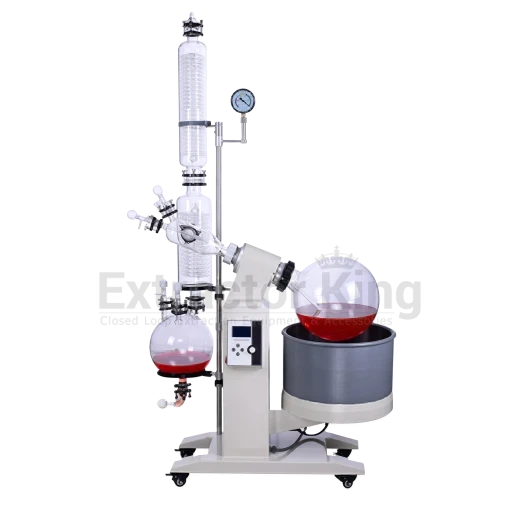 20L Rotary Evaporator - Science King
View product
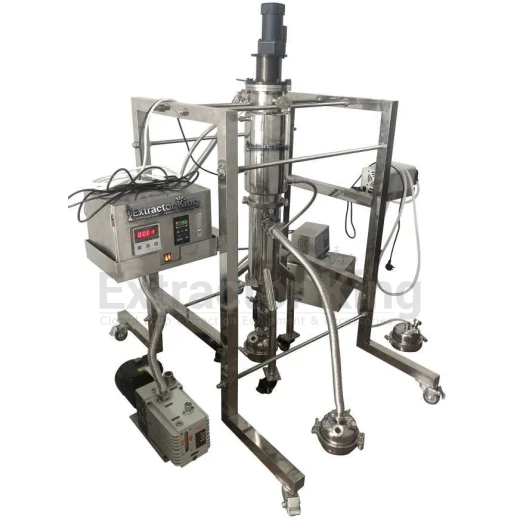 MWFD-5L Molecular Wiped Film Distillation System (Turn Key) - Science King
View product
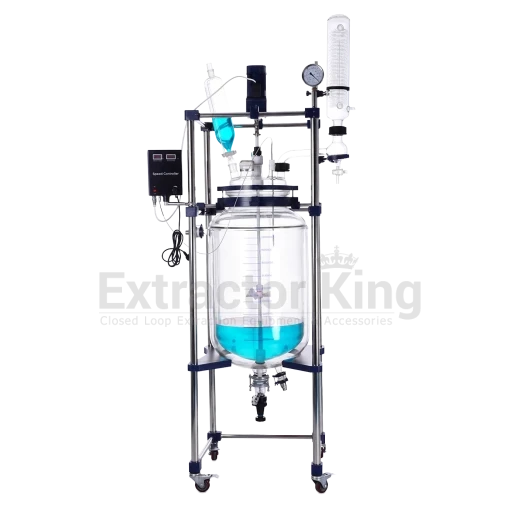 50L Glass Reactor - Science King
View product
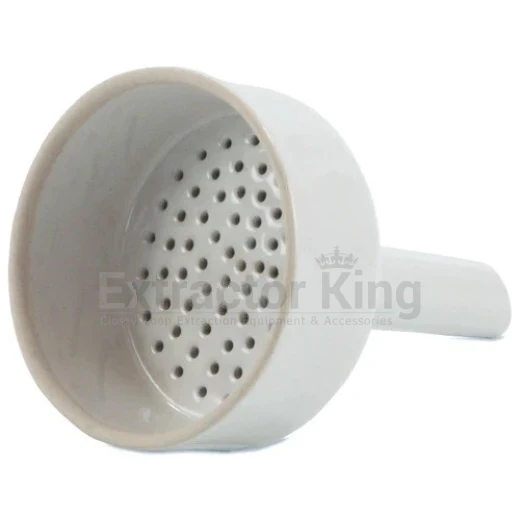 Porcelain Buchner Funnel 400 mL - Science King
View product
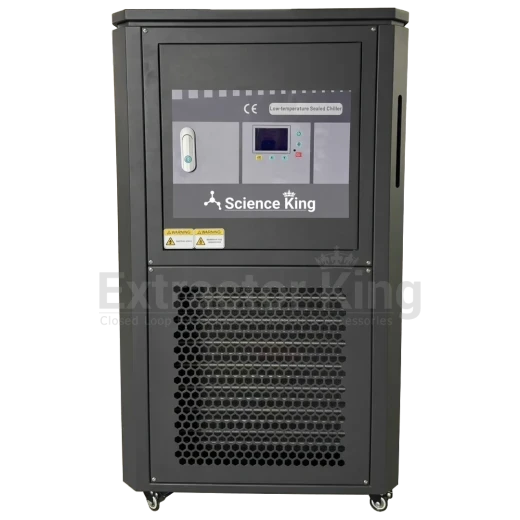 -80 50L Capacity 50L/M Coil Chiller - Science King
View product
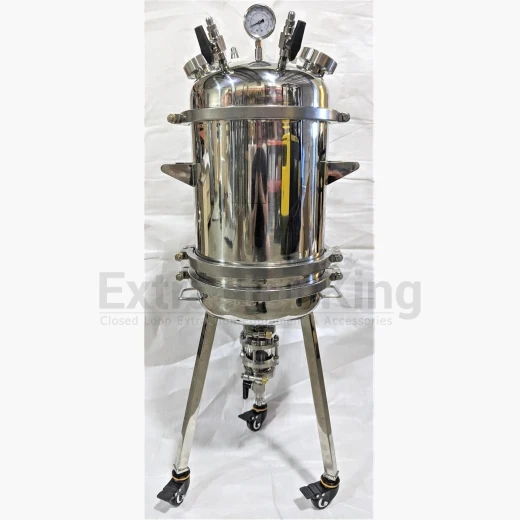 12″ Enclosed Buchner Filtration System - Science King
View product
 Quantitative Filter Paper 30cm Medium Flow 100 Pack - Science King
View product
 Silica 60A – Carbon Chemistry
View product